
The Hidden Dangers of Closing Old Credit Cards
It seems like logical financial advice: if you are no longer using a credit card, you should close the account to avoid fraud and simplify your life. However, in the world of credit bureaus like CIBIL, FICO, and Experian, logic does not always align with the algorithm. Closing an old credit card is often one of the most damaging mistakes a borrower can make.
1. The Credit Age Trap (Length of History)
Lenders love predictability. The longer you have successfully managed a credit line, the safer you appear. Your Average Age of Accounts (AAoA) makes up a significant percentage of your total credit score.
Why Your Oldest Card is Your Most Valuable
If your first credit card is 10 years old, and you recently opened a new card 1 year ago, your average credit age is 5.5 years. If you close that 10-year-old card because you "don't use it anymore," the bureau will eventually drop it from your active history. Suddenly, your average credit age plummets to just 1 year, making you look like a highly inexperienced borrower. Your score will drop instantly.
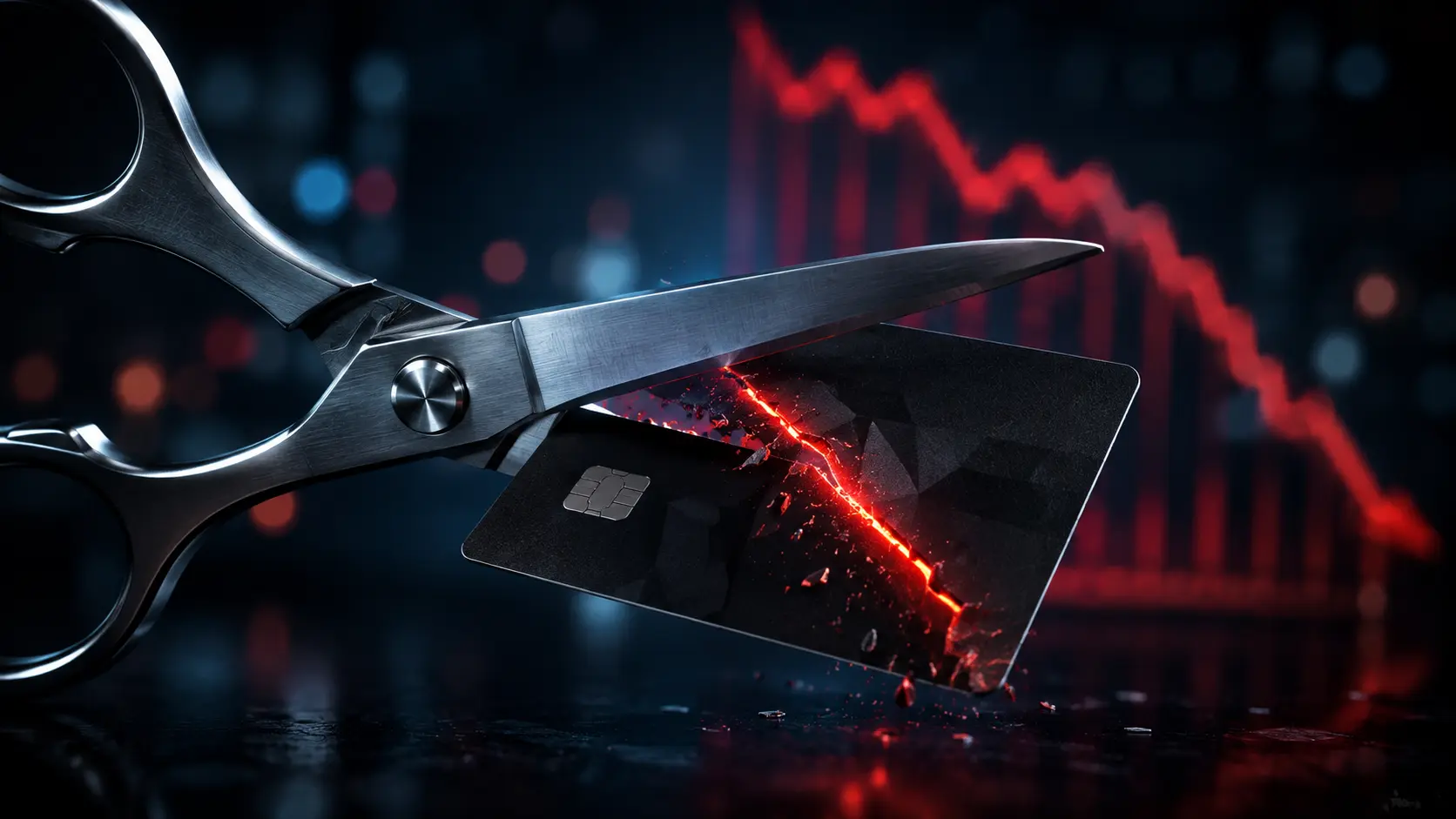
2. The Utilization Ratio Spike
The second, and often more immediate, danger of closing a credit card is how it destroys your Credit Utilization Ratio (CUR).
The Mathematical Disaster
Let's look at the math. Suppose you have two credit cards:
- 💳 Card A (Old Card): ₹1,00,000 Limit (₹0 balance)
- 💳 Card B (New Card): ₹1,00,000 Limit (₹50,000 balance)
Before Closing: Your total limit is ₹2,00,000. You owe ₹50,000. Your CUR is a very healthy 25%.
After Closing Card A: Your total limit drops to ₹1,00,000. You still owe ₹50,000. Your CUR instantly spikes to a dangerous 50%. Your score will crash.

3. When Should You Actually Close a Card?
There are only two valid scenarios where closing a credit card makes financial sense in 2026:
1. Extremely High Annual Fees
If you are paying ₹5,000 to ₹10,000 a year for a premium travel card, but you no longer travel, the fee is not worth the credit score boost. However, before you cancel it, ask the bank to downgrade it to a lifetime-free (LTF) basic card. This keeps the account history alive without the cost.
2. Severe Overspending Habits
If having the available credit is causing you to spiral into unmanageable debt, cancel the card immediately. Mental health and staying out of high-interest debt are always more important than a 3-digit score.
Conclusion: The "Sock Drawer" Strategy
How to Keep Old Cards Active Safely:
Instead of closing your oldest card, put a small, recurring subscription on it (like Netflix or Spotify) and set it to auto-pay from your bank account. Then, put the physical plastic card in your sock drawer. It will generate a perfect on-time payment history every month, anchoring your credit age and boosting your score on autopilot.
Did a Closed Card Crash Your Score?
If you accidentally ruined your credit mix or utilization ratio by closing an old account, don't panic. Shivam Maurya and the Cibilwala team have proven strategies to rapidly rehabilitate your score and fix damaged credit profiles.
Message Us to Fix Your Score🔒 100% Secure • Proven Recovery Strategies • Expert Analysis